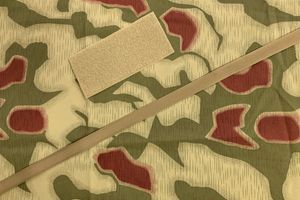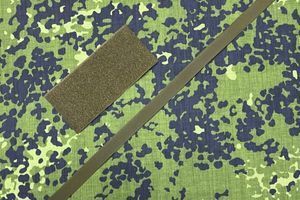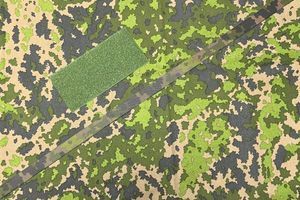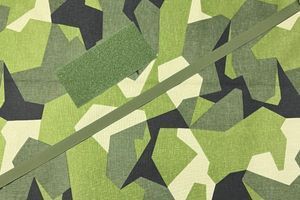

Splinter camouflage, or Splittertarnmuster, is one of the earliest military camouflage patterns developed and widely used by Germany. First introduced in the 1930s, it was designed to improve soldier concealment on the battlefield by breaking up silhouettes and blending into varied terrain. Over the decades, Splinter camouflage has undergone modifications, but its influence can still be seen in modern military and civilian camouflage patterns worldwide.
Origins and Development
Splinter camouflage was developed in the early 1930s by the German Reichswehr as part of an effort to modernize military equipment and tactics. At the time, most soldiers worldwide still wore solid-colored uniforms, but Germany was among the first to systematically study camouflage’s effectiveness.
The initial version, Splittertarn B, was officially introduced in 1931 as a camouflage pattern for Zeltbahn (tent ponchos), which could also be worn as a rain poncho or used as a camouflage cover. By 1937, this pattern was also incorporated into uniforms and field gear used by the Luftwaffe’s ground troops and some Wehrmacht units.
The pattern was based on detailed research into how soldiers could blend into their surroundings more effectively, particularly in European battlefields with mixed vegetation, forests, and urban environments.

Design and Characteristics
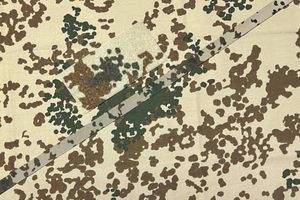
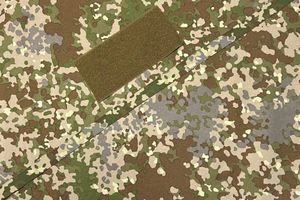
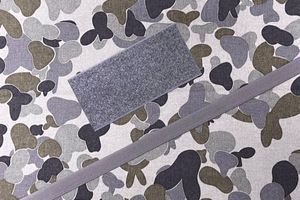
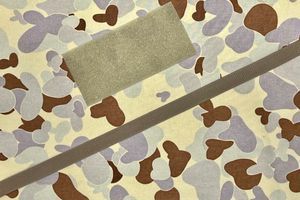
The Splinter pattern consists of a series of jagged, angular shapes (splinters) in different shades of green and brown, overlaid with thin diagonal “rain” lines to further disrupt the shape. The design elements include:
• Main Colors: A combination of olive green, brown, and beige, with a light green or tan background.
• Sharp Geometric Shapes: The jagged edges of the pattern mimic the way natural light and shadows interact in forests and open fields.
• Rain Stripes: Thin, slanted lines add a layer of complexity, making it harder for the human eye to detect movement at long distances.
This pattern was unique at the time because it combined geometric disruption with a more natural blending effect, making it effective at both short and long distances.

Use in World War II
Splinter camouflage saw widespread use among German forces during World War II, particularly among Luftwaffe ground units, paratroopers (Fallschirmjäger), and certain Wehrmacht personnel. Soldiers used it on smocks, field tunics, helmets, and tent gear, helping them blend into battlefields across Europe.
However, the effectiveness of Splinter camouflage was somewhat limited by the materials available at the time. Early versions used cotton duck fabric, which was durable but not ideal for wet conditions. Later wartime versions experimented with more breathable fabrics, but supply shortages often forced soldiers to mix different camouflage types.
By the later years of the war, Germany introduced more advanced patterns, such as Leibermuster, which built on the foundation of Splinter but added a more complex mix of colors and shapes.

Post-War Influence and Legacy
After World War II, many countries adopted or modified the Splinter camouflage design, adapting it to their own needs:
• West Germany: The Bundeswehr continued to use a modified Splinter camouflage for training purposes and special operations.
• East Germany (GDR): The NVA (National People’s Army) developed the Strichtarn pattern, which evolved from Splinter’s “rain” elements.
• Sweden: The Swedish M90 camouflage shares some design elements with Splinter but in a more modern digitalized form.
• Post-Soviet States & Civilian Use: Some post-Soviet and European military surplus markets continued to use variations of Splinter in civilian and paramilitary applications.
Even today, Splinter camouflage remains popular among reenactors, collectors, and military surplus enthusiasts due to its historical significance and visually striking pattern.
Modern Reproductions and Tactical Gear
Although Splinter was phased out in favor of more advanced camouflage like Flecktarn, many companies still produce modern versions of Splinter camouflage for tactical and outdoor use. It has found a new life in:
• Airsoft and MilSim gear – Reproduction uniforms and tactical vests are common among historical reenactors and players.
• Hunting and Outdoor Clothing – Some manufacturers use Splinter designs for hunting apparel due to its natural blending capabilities.
• Fashion and Streetwear – Military-inspired designs have become popular in urban fashion, and Splinter camouflage is sometimes featured in limited-edition collections.