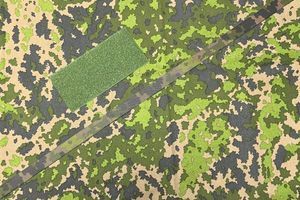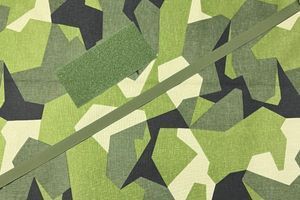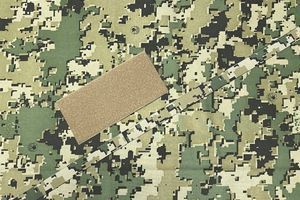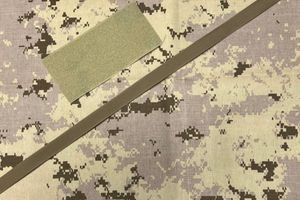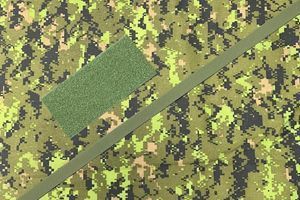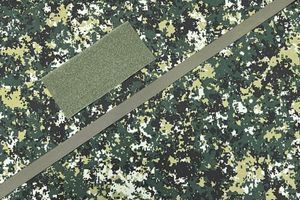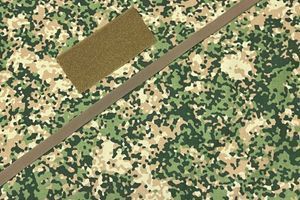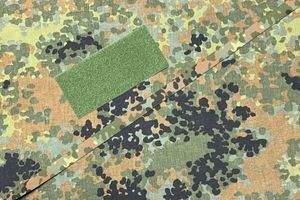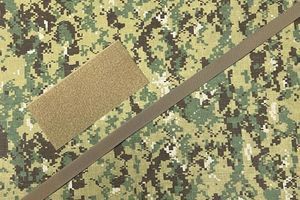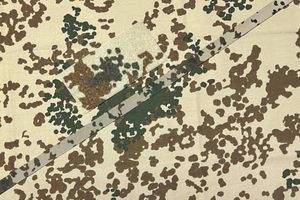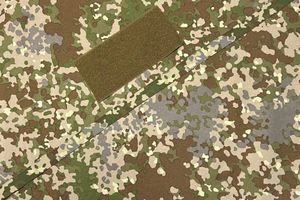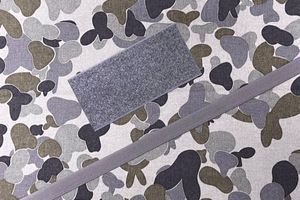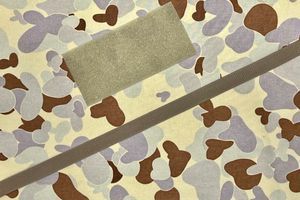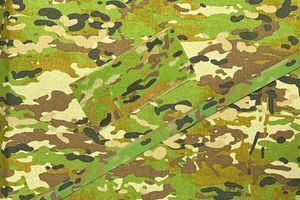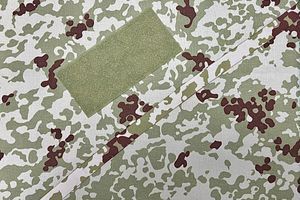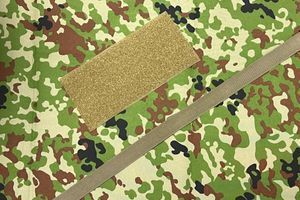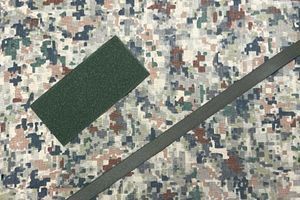
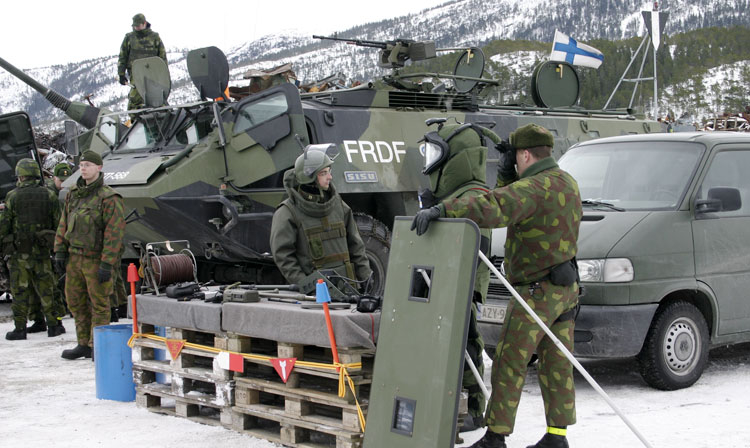
M91 is the standard camouflage pattern developed for the Finnish Defence Forces (Puolustusvoimat) in the early 1990s. It replaced the solid olive-green uniform, which had been used for decades, and became the first official camouflage pattern in Finnish military service.
M91 was designed specifically for Finland’s climate and terrain, including its dense forests, marshlands, and mixed landscapes, making it highly effective in the temperate conditions of Northern Europe.
Development and Purpose
Before 1991, Finnish troops primarily wore solid-colored uniforms—olive green being the standard for most units. However, by the late 1980s, it became evident that camouflage patterns provided superior concealment on the battlefield.
After extensive testing of different designs, M91 was officially adopted in 1991, becoming the standard for all branches of the Finnish Army, Navy, and Air Force.
The main objectives of M91 were:
• Enhancing concealment in Finland’s natural environment – The pattern was designed for forests, wetlands, and mixed landscapes.
• Ensuring year-round usability – Its color scheme was suitable for spring, summer, and autumn, while a separate white uniform was used for winter.
• Modern adaptation – M91 was developed with new reconnaissance and surveillance technologies in mind.
This camouflage remained in service as the primary uniform until the early 2010s, when it was gradually replaced by newer M05 patterns.
Design and Features
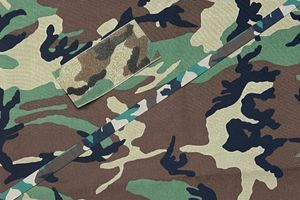
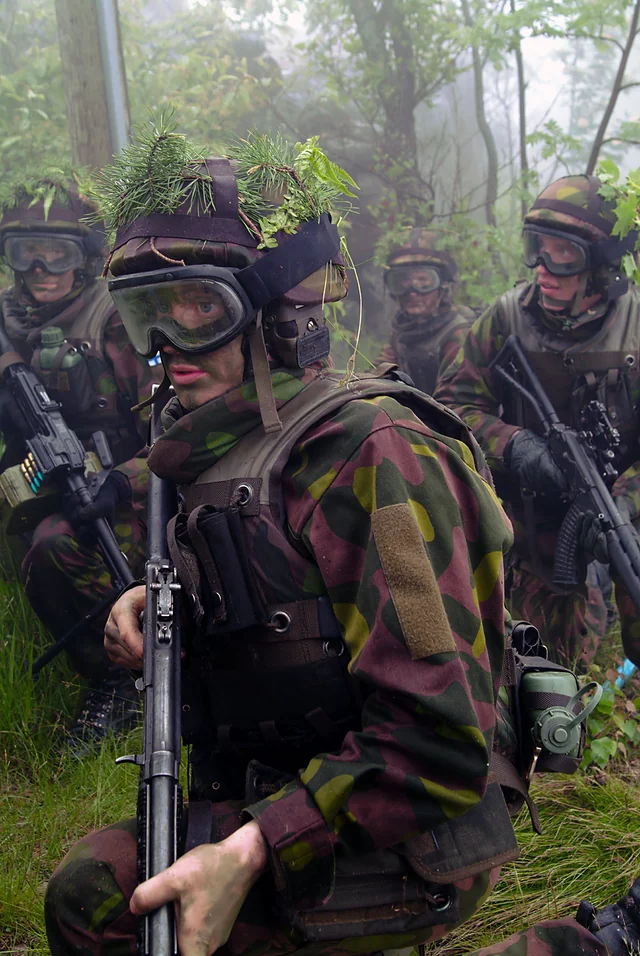
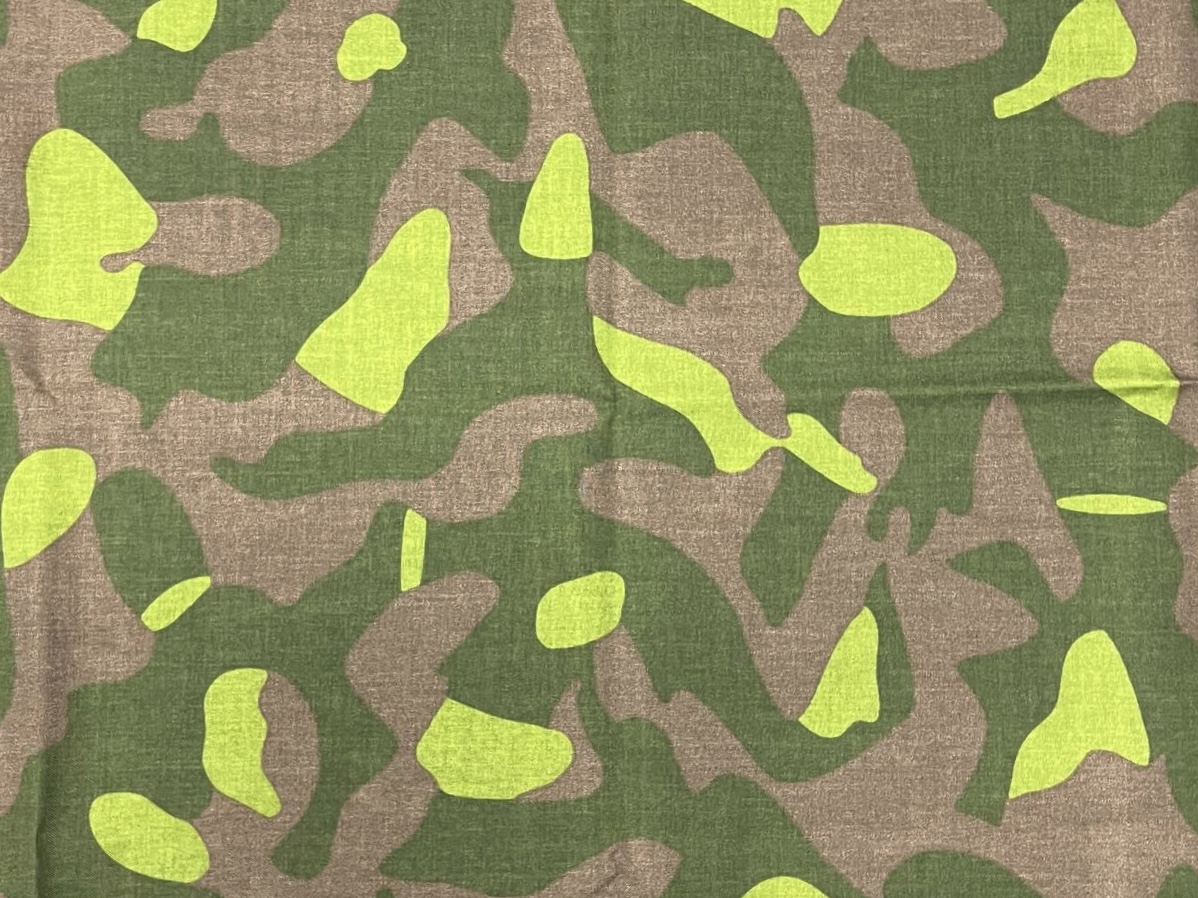
M91 is a traditional “blotchy” camouflage pattern consisting of three main colors, designed to blend with the Finnish landscape.
• Color scheme:
• Dark green – The dominant color, representing the primary tones of Finnish forests.
• Olive/brown – Adds depth and helps blend in mixed terrain.
• Black – Provides contrast and breaks up the soldier’s silhouette in shadows.
Unlike the angular design of M90 (Sweden) or pixelated camouflage patterns, M91 uses soft-edged, organic shapes, which effectively disrupt the human outline in forests and marshlands.
• Fabric and durability: M91 uniforms were made of durable cotton-synthetic blends, resistant to wear and moisture.
• Infantry-oriented design – The uniform was designed for combat operations, long marches, and prolonged field use.
M91 was not intended for urban or desert environments, as its coloration was developed exclusively for Finland’s natural surroundings.
Use in the Finnish Defence Forces
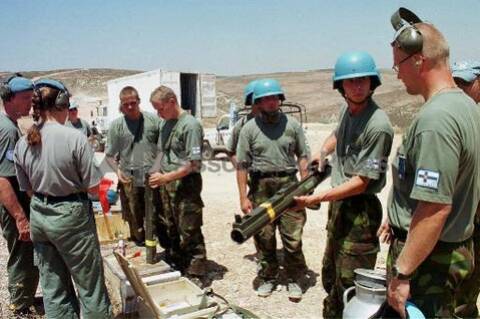
M91 was the standard-issue camouflage for:
• Finnish Army ground troops, including mechanized infantry and border guards.
• Specialized units, such as reconnaissance teams.
• Cadet corps and training centers, where it remained in use until the 2010s.
M91 remained the primary camouflage until 2005, when the transition to M05 camouflage began.
However, M91 is still in use, especially in reserve units and training programs.
Variants and Evolution of M91
Over time, several versions of M91 were developed:
• M91 Winter – A plain white uniform for snow-covered environments.
• M91 Modified – An improved version with more durable fabric and redesigned pocket placement.
• M05 (Successor to M91) – A digital camouflage pattern that replaced M91 but retained its core principles of adaptation to Finnish terrain.
Influence on Other Camouflage and Civilian Use
While M91 was a national military standard, it had a notable influence on Finnish and European camouflage development:
• The core principles of M91 were incorporated into M05, which serves as its technological successor.
• Several Finnish civilian hunting and tactical clothing lines feature similar designs, proving its effectiveness.
• Popularity among airsoft players – M91 uniforms remain available on the surplus market, making them popular among military history enthusiasts and tactical game players.
Although M91 has been largely replaced, it remains a significant milestone in the history of the Finnish Army, marking the transition to modern camouflage equipment.