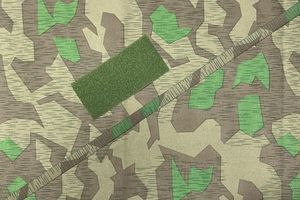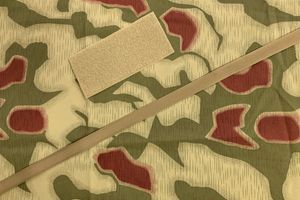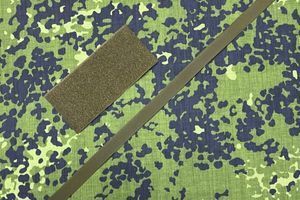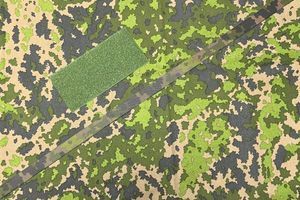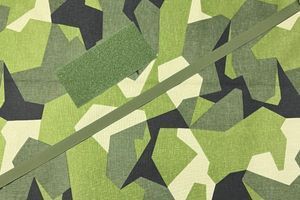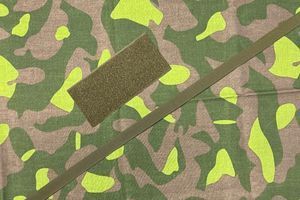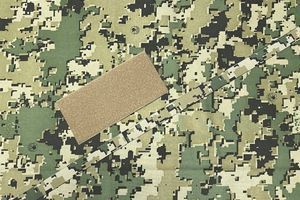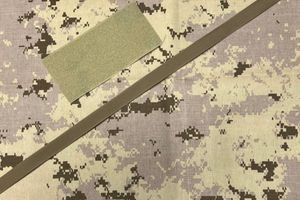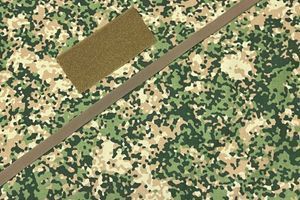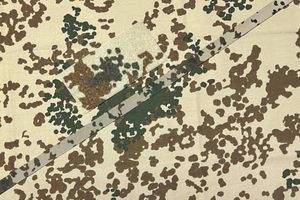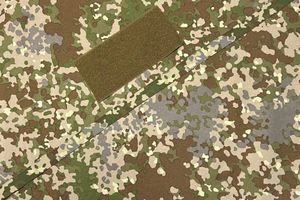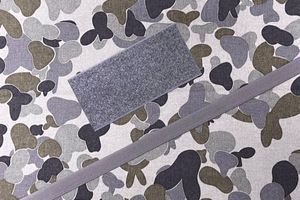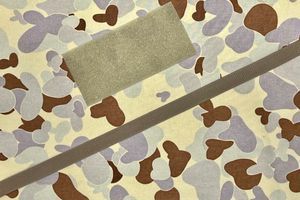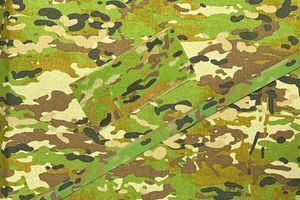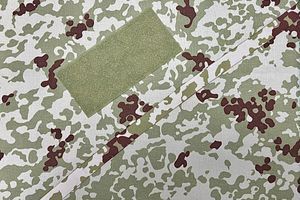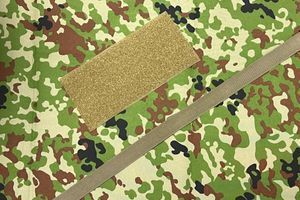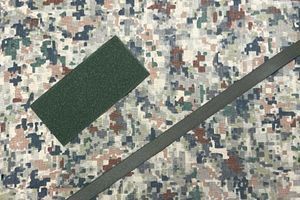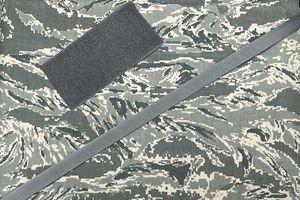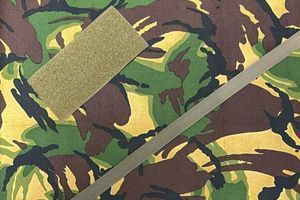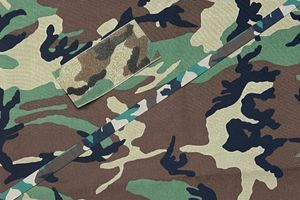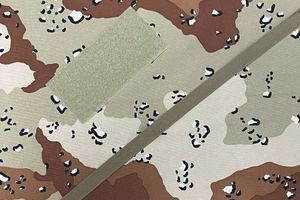
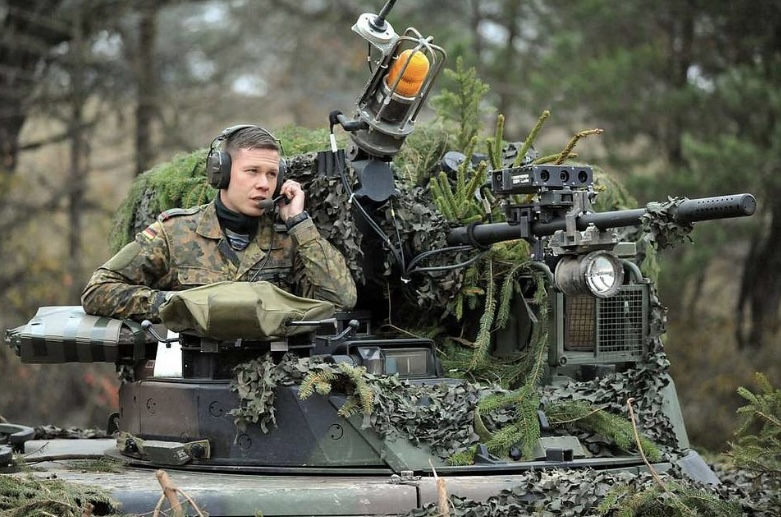
Flecktarn is the primary camouflage pattern of the German Armed Forces (Bundeswehr), officially introduced in the 1990s after years of testing. Its name comes from the German words “Fleck” (spot) and “Tarnung” (camouflage), reflecting its distinctive multi-spot design.
Flecktarn is known for its high effectiveness in wooded environments, where it blends seamlessly into the surroundings due to its small spots and smooth color transitions.
The History of Flecktarn
The idea of spotted camouflage dates back to World War II, when German forces experimented with multi-color patterns to reduce visibility under various lighting conditions.
After the war, the development of similar camouflage schemes resumed. In the 1970s, West Germany began researching a new camouflage for the future Bundeswehr. After decades of testing hundreds of variations, Flecktarn was selected in the 1980s.
It was officially adopted in the 1990s, replacing the solid olive-green uniform that had been in use since the Bundeswehr’s founding in 1955.
Flecktarn’s Design and Features
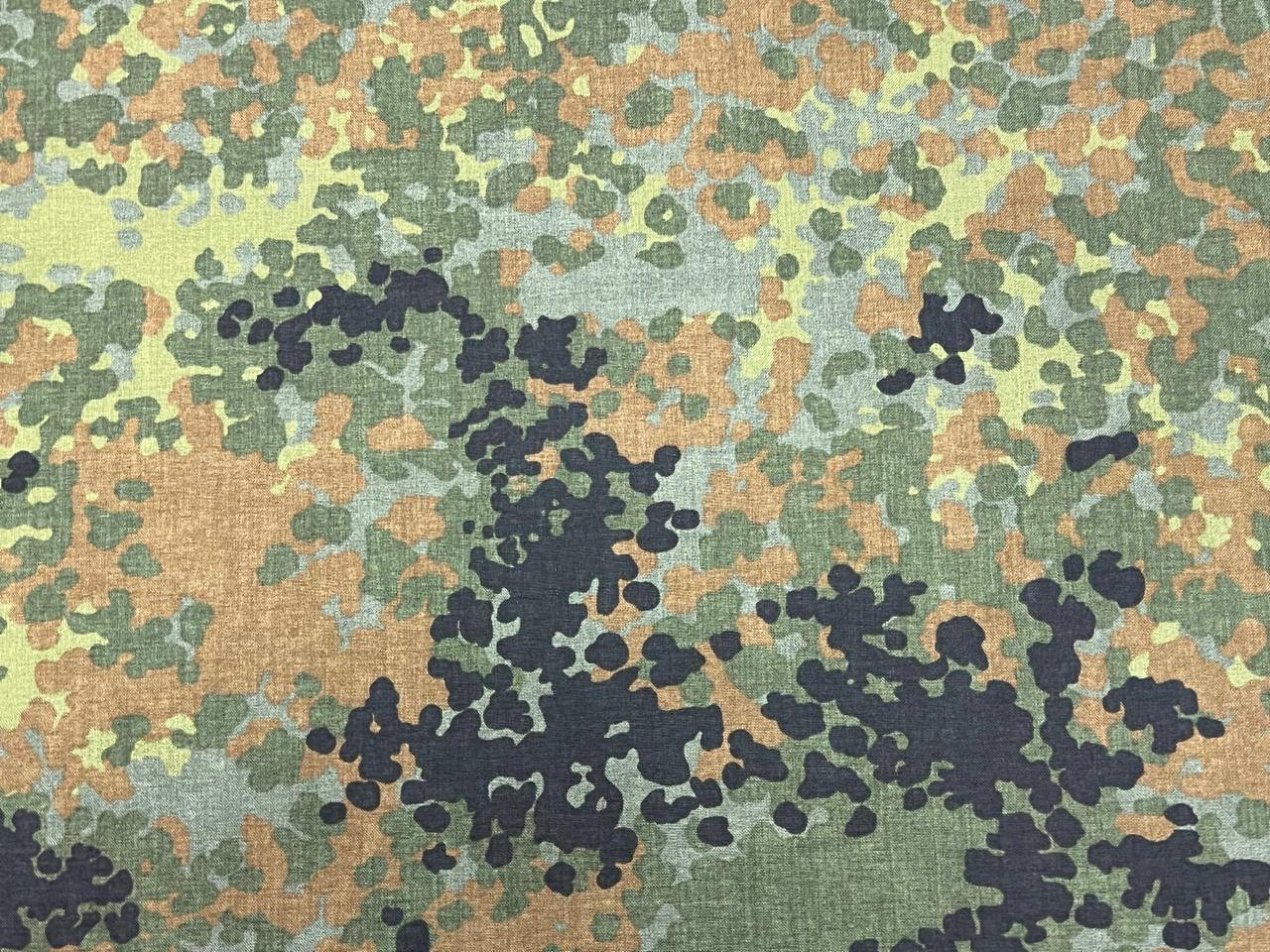
Flecktarn features a complex spotted pattern, creating a disorienting effect that makes a soldier less visible at any distance.
Key Features of Flecktarn:
• Five-color scheme
• Includes dark green, olive, light green, red-brown, and black.
• Optimized for European forests and temperate climates.
• Micro-contrast design
• Small spots mimic natural shadows and light transitions, enhancing camouflage effectiveness.
• Effective at both close and long ranges.
• Blurred effect
• At a distance, the spots merge into a complex pattern, making the figure harder to detect.
• High durability
• The uniform is made from wear-resistant fabrics with Ripstop technology.
• Withstands harsh weather conditions.
Flecktarn in the Bundeswehr
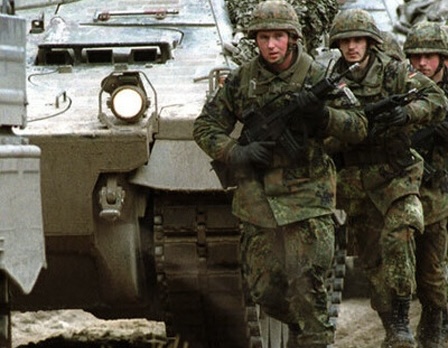
Since its official adoption in the 1990s, Flecktarn has become the standard camouflage for all Bundeswehr units.
Where is Flecktarn Used?
• Forested regions of Central and Western Europe
• Ideal for the wooded areas of Germany, France, Poland, and Belgium.
• Mountainous areas
• Used in the Alps and other mountainous regions.
• Mixed environments
• Thanks to its balanced color palette, Flecktarn performs well in fields, brushlands, forests, and even urban settings.
Variants and Derivatives of Flecktarn
• Tropentarn (Desert Variant)
• Used by the Bundeswehr in missions in Afghanistan, Mali, and Iraq.
• Features lighter colors (sand, beige, brown).
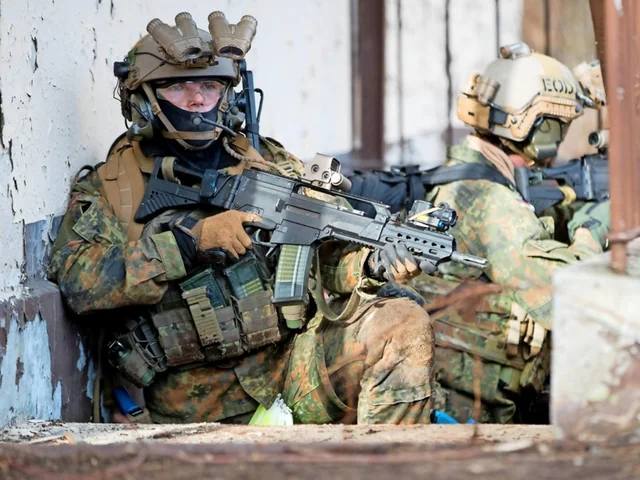
• Two-color Flecktarn
• Used by KSK special forces, consisting of olive and black for night operations and close-range engagements.

Why is Flecktarn So Effective?
Although digital camouflage patterns are becoming more popular today, Flecktarn remains one of the most effective traditional camouflages.
Its uniqueness is due to several factors:
• Optimal spot size
• Medium-sized spots allow the camouflage to work at both close and long distances.
• Unlike large geometric patterns, Flecktarn mimics natural textures rather than simply breaking up the silhouette.
• Effective camouflage in motion
• Small spots with soft color transitions make Flecktarn especially effective when moving, as the figure does not merge into a single silhouette.
• This gives it an advantage over sharp-edged camouflages, which work better on static objects.
• Adaptability to different seasons
• The standard Flecktarn pattern is effective not only in summer but also in autumn and spring, when the ground, leaves, and tree bark have similar shades.
• This makes it versatile for Central Europe.
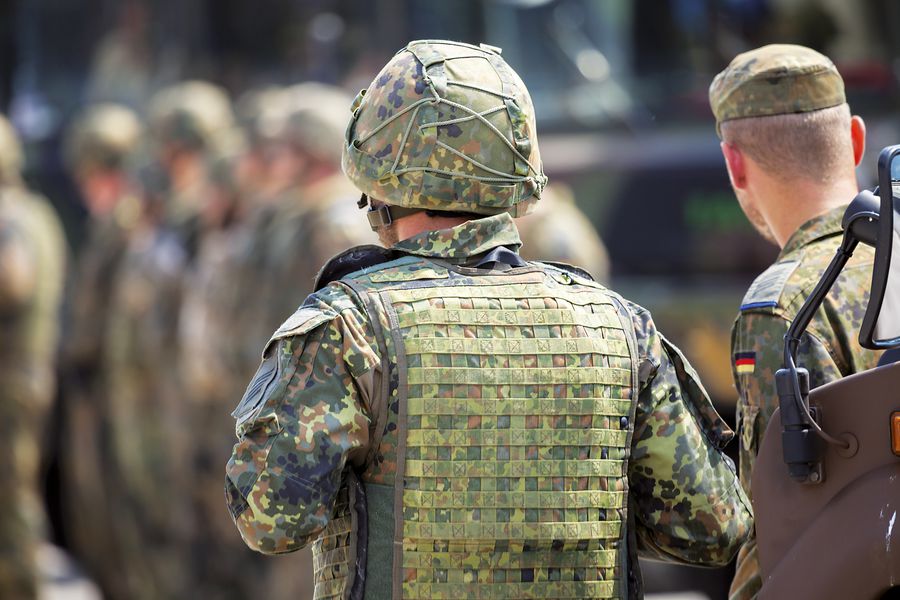
How Flecktarn Influenced Tactical Fashion
Flecktarn has become an iconic camouflage, influencing military uniform development and civilian tactical clothing.
• Popularity among militaries worldwide
• Besides Germany, it has been used by the Netherlands, Denmark, Austria, and other NATO countries.
• Many special forces worldwide take inspiration from its structure for their own camouflage designs.
• Flecktarn in Airsoft and Civilian Markets
• The camouflage has gained huge popularity among airsoft players due to its effectiveness and availability.
• Flecktarn’s unique pattern is even used in street fashion, as it looks great on tactical and everyday clothing.